
I want to write something about We Day, which was last Wednesday.
I went, and I feel kind of cheap about it because I weaseled myself a press pass, even though I wasn’t sure I was going to write anything about it, because I don’t feel like I have that kind of blog. I get lots of pitches on a daily basis and I turn away 99.99% of them because my blog is a space for me to think things out and work on my writing and I never want it to feel like a job, even if the offer is a weekend at a spa (SOB) or totally awesome movie passes (SOB SOB).
But I was very curious about We Day, and I really really wanted to go, and more than that, I wanted to take my older two kids in the hopes that they’d learn something and get excited about something, so not only did I take the press pass under (potentially) false pretenses, I also weaseled “helper” passes for my oldest two kids, which, GAH. But there you have it.
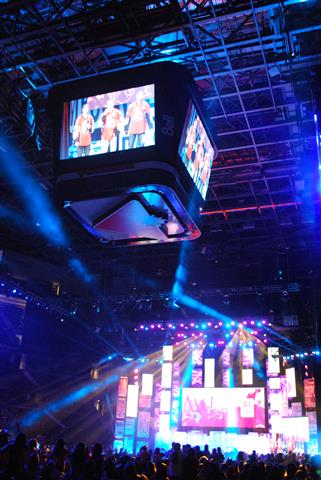
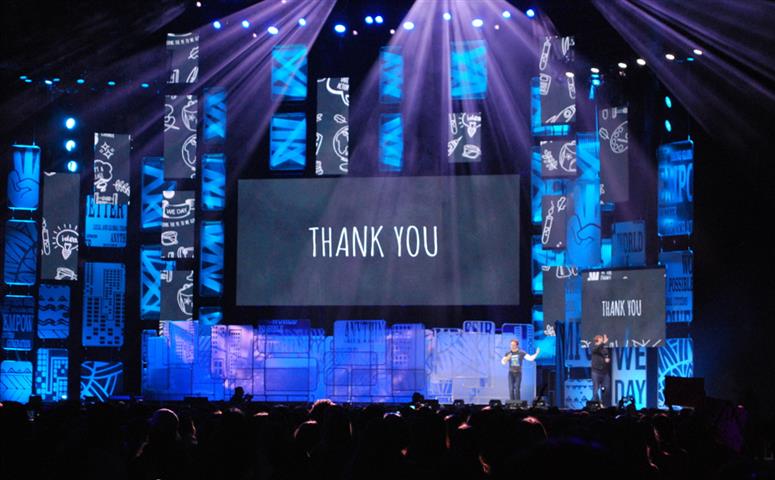
So, off we went to National We Day. What’s We Day? It’s a day of celebration (there are actually a few across the country, but the one in Ottawa is the biggest one). You can’t buy a ticket. Instead, you have to register on their website to do one local act of charity, and one global act of charity. It’s usually youth groups or school classes that register, and work as a group on their projects. You can do anything from growing a garden full of food for the local food bank, to putting on a talent show to raise money to buy goats in Kenya, to tutoring to improve literacy in your school, to sending a few students to Indonesia to build a school. Just about anything counts, as long as you do SOMETHING.
The idea is the brainchild of Craig and Marc Kielburger, brothers from Toronto. They run their own charity full time – it’s called Free the Children — and We Day and the We Act program fall under that charity. On We Day, kids who registered for the program and completed their activism commitments head over to the Canadian Tire Centre – 18 000 teens were there – for a day of inspiring speeches, videos, and music. It’s a kind of reward for having done their jobs and motivation to keep going.
So, what did we think?
First, the good stuff. Craig Kielburger, who I got to meet in a small press group first thing in the morning, is the real deal. He’s a passionate believer in the idea that everyone, even young people, can change the world, and that the smallest of changes can make a huge difference. He’s a compelling speaker and what I like most about him is that he’s very down to earth – he doesn’t talk just about Big Ideas but also has real, concrete ideas for how YOU, personally, can make a difference. Sometimes the world seems like a really big place with really big problems but listening to Craig makes you believe that we can do SOMETHING. He’s very inspiring. I particularly loved his story about how his mother had a very present and constant belief in charity work and had a huge impact on her sons. It really makes you think about the example you’re setting, as a parent, and how the small differences you make can snowball through generations into something a lot bigger.
Some of the other speakers were great, too. Marlee Matlin was there (she’s on the teen-appeal show Switched At Birth) and she was AWESOME, hilarious and inspiring and just so cool. HIV positive teen Caitlin Tolley was amazing, and local teen activist Jonathan Pitre brought tears to my eyes with his amazing attitude – I wish my kids were as well-spoken and clear-eyed and positive as those two. I also loved rocket scientist Natalie Panek, who talked about women in tech, and there were very brief appearances by Free The Children regular speaker Spencer West, who I wish had talked more because I could listen to that guy all day long (short version: he climbed Mount Kilimanjaro – on his HANDS, because he has no legs. YEAH.). My kids were excited to see the Governor General because they are nerds like that.

For the kids in the audience, although there was general cheering and a very loud, positive mood, it was clearly the musical acts that appealed – they rushed the stage and sang along to musicians I am far too old to have heard of. For instance, this guy “JRDN” sang this song and it got crazy in there:
But it wasn’t all stardust and glory. Gal Smiley is 10, and she had a good time overall, enjoying the music and, although she doesn’t seem motivated to activism, she’s at least thinking about things and curious. We happened to run into a class of kids from her own school who were there – older kids, from grade 8 – and that was actually the most influential moment, getting her thinking about things she might do herself when she gets to that age.
For the Captain though, who is 12 – he noticed something else going on. Midway through the day I asked him what he thought about We Day, and he said this:
“I feel like I am being marketed to.”
YES.
Here’s the thing: you can’t do major acts of charity without money. And you can’t get that kind of money from a bunch of teenagers (although some schools did do AMAZING feats of fundraising). To get the really big bucks, you need corporate sponsors.
And those corporate sponsors, as well intentioned as they may be, are not going to let the chance to market to a captive audience of 18 000 teens with disposable income go to waste.
And so, we sat through “inspirational” talks by the CEO of Ford. The CEO of Unilever. The CEO of Telus. The CEO of WestJet. These people tried, they really tried, to Talk Teen and bring some sort of environmental/activist slant to their talks. But there’s no getting around the fact that their central message was, if you want to do good in the world, BUY OUR STUFF. It felt kind of icky, all these older people (mostly grey-haired men) trying to be all hip-grandfather and sell on the side. The one company I thought that got it right was CAA – they had a young person deliver their message (a girl on the Canadian Women’s Hockey team). She had been a part of their safety program – they train kids to be crossing guards at schools – and their entire message was about that program. I mean, not that teenagers are the major market for CAA but at least it felt like they had a message that was FOR TEENS, and not about shopping. GAH.
Plus, Free The Children itself is a charity, but that charity needs to raise money. So they were selling stuff – jewelry and t-shirts and posters – that would raise money for Africa, which is good yes, but also heavily advertised and marketed with several videos throughout the day. They also have a new phone app, and when you download it Telus gives money to charity, so DOWNLOAD THE APP was all over every presentation, which actively started to bug the Captain.
I’m conflicted. I don’t know how to feel about that. I understand that change cannot happen without money, and that money is not going come from some anonymous billionaire out of the blue. And I want change to happen. But I also don’t want potentially unaware teens to be manipulated and marketed to, without really understanding what is happening. I want them to know that there are many ways to spend their money that will help the world, including direct donation to a charity of their choice that they feel personally passionate about, and not just by buying Unilever products. I want them to understand that when Unilever makes a charitable donation, they get an enormous tax break, and so by funneling your donation money through them you are helping them, which is maybe not bad, per se, as you got some shampoo and they got a tax break and Kenya got goats, which is win-win-win, but at least be AWARE of the chain of events, you know?
So we talked a lot on the way home about what we’d seen, and what we’d learned, and how corporations play a part in charity and are possibly a necessarily evil, or maybe even a good thing. We talked about how a charity can sometimes be a business and what that means.
And we talked about changing the world, and who we want to be, and how we want to do that. So I’m going to call We Day a success, and my press pass was worth it.


 TurtleHead